Laying a Weeknight Table
The weeknight table doesn't need flowers or best china. It needs to be ready before the food lands, so dinner feels chosen rather than grabbed. Here is a five-minute setting you can repeat every night without thinking.
The case for a five-minute table
A weeknight table doesn't need to be beautiful; it needs to be ready. A clear, calm surface tells everyone the working day is behind them and the evening has begun. When the table is set before the food arrives, dinner feels like something you chose rather than something you grabbed on the way past, and that small shift changes the whole mood of the room.
The aim isn't a photograph. It's a place that works for tired, hungry people who want to sit down together without fuss. Keep it simple, keep it repeatable, and let it become a habit your hands can do on their own.
Clear the surface first
Before anything else, take off everything that doesn't belong at dinner: the post, the keys, the half-finished project, the water glass from this morning. A table gathers clutter all day, and nothing looks settled sitting on top of a mess.
Give the daytime clutter a home nearby so clearing is one sweep of the arm rather than ten small trips. A tray on the sideboard, a basket by the door, a single shelf will catch the odds and ends so the table can go back to being a table. Wipe it down with a damp cloth and let it dry while you gather what you need.
The three things every place needs
Forget the full formal setting. On a weeknight, each person needs three things, and the rest is optional:
- A plate, sized for the meal you are actually eating.
- A fork and knife, or whatever the food calls for, a spoon for soup, chopsticks for noodles.
- A glass, filled before you sit so nobody has to get up again.
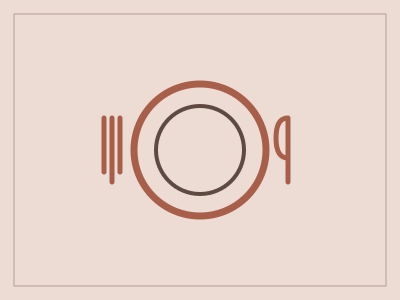
Lay the fork on the left and the knife on the right, blade turned in. You needn't be precise; the point is that hands know where to reach. A napkin, cloth if you have it, paper if you don't, sits under the fork or on the plate. That is a complete weeknight place, and it takes under a minute per person.
If you want to lift it half a notch without adding work, keep a small stack of cloth napkins where you set the table and use them every night, not just for guests. A cloth napkin costs you nothing once it's in the wash rotation, and it quietly tells everyone this meal is worth a little care. The same goes for keeping the everyday cutlery in a tray or caddy near the table rather than across the room, so laying places is a matter of reaching, not fetching. The shorter the distance between where things live and where they're used, the more reliably the table gets set on the nights you're most tired and least inclined.
A centre that earns its keep
The middle of the table should hold what the meal needs, not decoration for its own sake. Put the serving dish where everyone can reach it and set down the things people always ask for before they ask: salt, pepper, water, a serving spoon, whatever sauce belongs with the food.
If you like a little something more, keep it low and unbreakable, a small bowl of fruit, a short jar of whatever is on the windowsill, a candle you will actually light. Anything tall blocks conversation, and anything precious makes everyone careful. The best weeknight centre is one nobody has to worry about.
A table is set well when no one has to leave it. Everything the meal needs is already within arm's reach.
Match the setting to the meal
Pay attention to what you are serving and lay accordingly. Soup wants a spoon and a deeper bowl; saucy pasta wants a plate with a rim; toast and eggs on a slow evening want almost nothing at all. When the setting fits the food, the meal feels considered even when it took twenty minutes to make.
This is also where you save yourself work. If it is a one-bowl night, don't lay out plates you will only have to wash. Match the table to the meal, and you will never set more than you need.
Make the reset part of dinner
Setting is only half the habit; clearing is the other half. Before anyone drifts away, fall into a simple rhythm, one person clears the plates, one wipes the table, one deals with the leftovers. It goes quickly as a team, and it leaves the table ready for tomorrow instead of waiting for you in the morning.
A table cleared each evening becomes the easiest surface in the house to set again, because you are never starting from a pile. Over time the whole loop, clear, set, eat, clear, grows so light you stop noticing you do it. That is the real aim: not a perfect table, but a dependable one, set in five minutes and quietly welcoming on every ordinary night.